Why Can’t We Finish Things for Ourselves?
You know what’s weird? Most of us are amazing at showing up for other people. Work deadlines? Done. Someone needs you? You’re there. But when it comes to doing something just for us—like that personal project gathering dust or that goal we keep putting off—suddenly we can’t seem to follow through.
And it’s not because we’re lazy. It’s really not.
Let me tell you what happened to me…
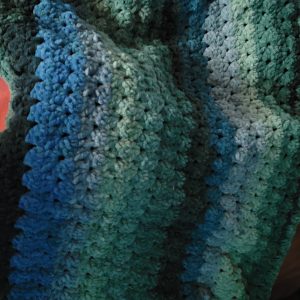
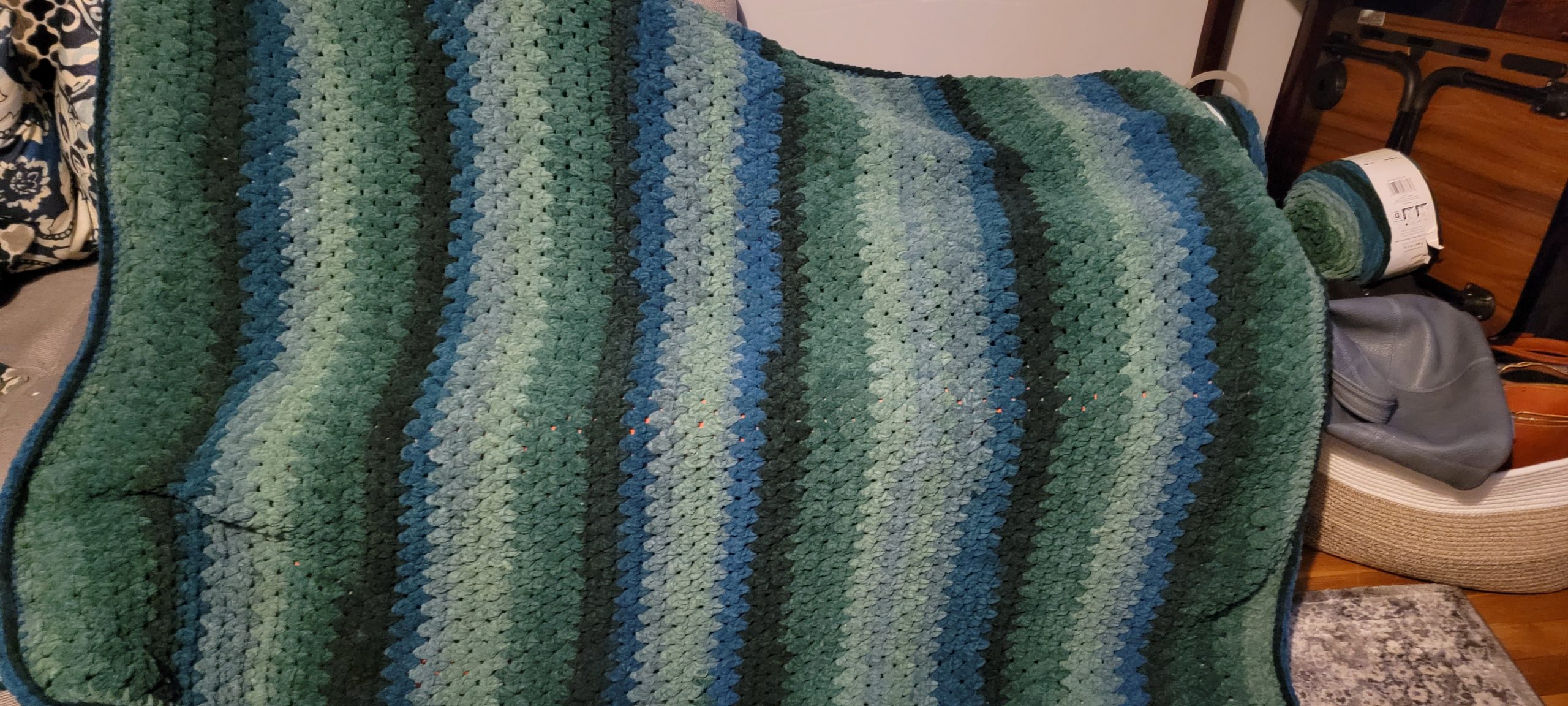
So I was making this crochet blanket. Just for me—no pressure, no deadline, nobody waiting on it. Just something cozy for myself.
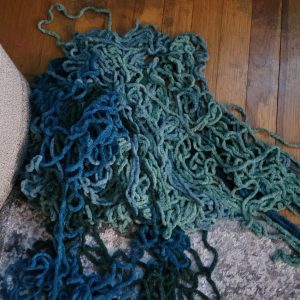
Halfway through, I noticed it wasn’t perfectly straight. And what did I do? I ripped out hundreds of rows and started over.
Yeah.
And then I sat there thinking… why do I do this? Why can I finish basically anything for anyone else, but when it’s for me, I keep hitting the reset button?
Here’s something I tell people all the time
I’m pretty open about this: I don’t put 100% effort toward much of anything.
And I don’t mean that in a self-deprecating way. I mean it as a survival strategy. As a way of actually finishing things instead of burning out chasing perfection.
But you know what’s interesting? Even knowing that—even teaching that—I still caught myself ripping out a perfectly functional blanket because it wasn’t flawless.
It’s one thing to say “good enough is good enough” when you’re talking to someone else. It’s a whole other thing to actually live it when it’s your own project, your own time, your own comfort on the line.
The “starting over” trap
Starting over feels good in the moment, right? Like you’re being productive. Like you’re taking control. Like you’re making it better.
But honestly? A lot of times it’s just avoidance in disguise.
We’re not avoiding the task itself. We’re avoiding feeling frustrated, imperfect, or vulnerable. We’re avoiding that uncomfortable “this isn’t quite right” feeling.
And here’s the kicker: when I tell people I don’t give 100% effort, what I’m really saying is “I’d rather finish at 70% than restart endlessly at 0%.”
But apparently, my brain didn’t get that memo when it came to my own blanket.
What DBT taught me about sitting with discomfort
DBT (Dialectical Behavior Therapy) basically says: a lot of our behaviors are just us trying to escape uncomfortable feelings.
In my case, I was trying to escape:
– Frustration that it wasn’t perfect
– Doubt about whether I could do it “right”
– That nagging perfectionism voice
Instead of just… feeling those feelings and moving forward anyway, I kept restarting.
The skills that actually help:
Distress Tolerance – Just sitting with the discomfort long enough to keep going. Like, “Okay, this feels bad, and I can keep stitching anyway.”
Wise Mind – This is the sweet spot between logic and emotion. Your emotional side is screaming “It’s not perfect, burn it all down!” Your logical side is like “Half an inch off literally won’t matter.” Wise mind says, “I can be okay with imperfect and still finish this thing.”
The point is: discomfort isn’t a stop sign. It’s just… discomfort.
And you know what? A 70% effort blanket that’s finished is warmer than a 100% effort blanket that exists only in my head.
ACT taught me to ask better questions
ACT (Acceptance and Commitment Therapy) flips the script from “How do I feel about this?” to “What actually matters to me here?”
Because here’s the thing—the blanket being perfect wasn’t actually what mattered. What mattered was:
– Finishing something for myself
– Having something cozy
– Doing something kind for me
ACT is all about: your feelings don’t get to be in charge. Your values do.
So instead of “I hate how this looks, I should stop,” it becomes “I value finishing things for myself, even when they’re imperfect.”
Even when they’re only 70% of what I imagined.
That’s the shift.
CBT helps with the mean thoughts
CBT (Cognitive Behavioral Therapy) looks at the thoughts that trip us up, like:
– “If it’s not perfect, it’s not worth finishing”
– “I should just start over so it’s right”
– “I always mess things up anyway”
These are classic perfectionism and all-or-nothing thinking.
And the thing is, if a friend came to you with this, you’d probably say something like “Hey, good enough is still really good!”
I literally tell people this for a living. I tell them not to aim for 100%. I tell them that finishing imperfectly beats not finishing at all.
But when it’s us? When it’s our own stuff? Suddenly we demand perfection.
The standards we’d never dream of holding others to become the bare minimum for ourselves.
Why other people’s stuff feels easier
I think for a lot of us—especially if you’re a helper type or a high-achiever—motivation is tied to other people.
We finish when:
– Someone’s waiting
– Someone will benefit
– Someone needs it
When it’s just us? Suddenly it feels less… important. Less real.
So finishing things for yourself isn’t actually about time management or discipline. It’s about believing you matter even when nobody’s watching.
It’s about believing that your 70% effort counts. That you deserve that slightly-crooked-but-still-cozy blanket.
The real work: just staying
Staying with something when it’s:
– Not perfect
– Uncomfortable
– Only for you
– Good enough instead of great
…that’s emotional work. Not productivity work.
It takes:
– Tolerating imperfection
– Acting on what matters, not how you feel
– Challenging those harsh thoughts about yourself
– Actually practicing what you preach
Finishing becomes proof that you trust yourself. Not that you did it perfectly—just that you stayed.
A different question to ask yourself
Instead of “Is this good enough?”
Try: “What does it mean about me if I finish this anyway?”
For most of us, the answer is something like:
– I matter
– My comfort counts
– My effort doesn’t need an audience to be valid
– I deserve the same grace I give everyone else
That’s not about crochet. That’s about self-worth.
Final thought
Sometimes the hardest things to finish are the ones nobody else will ever see.
Not because we can’t do it. But because finishing something just for ourselves requires believing we’re worth the effort.
Even the imperfect effort. Even the 70% effort.
Maybe especially that.
Because that belief? It’s a skill. You can practice it.
One imperfect, slightly crooked, good-enough row at a time. 🧶