
Grief is a Garden
Most people see a garden and focus on what is growing.
The tomatoes.
The cucumbers.
The peppers.
The herbs.
The blooms.
Few people stop to think about what had to die for any of it to exist.
A healthy garden is built on decomposition.
Leaves fall.
Plants wither.
Vegetable scraps are discarded.
Weeds are pulled.
Things that once served a purpose eventually reach the end of their usefulness.
Yet in gardening, we rarely call these things waste.
We call them compost.
Compost is one of nature’s greatest lessons.
Take what no longer serves a purpose.
Remove what is harmful.
Discard what cannot nourish.
Place the rest together in a dark place.
Add water.
Add air.
Add time.
Apply a little pressure.
Turn it occasionally.
Then wait.
Eventually what looked like trash becomes something entirely different.
Rich soil.
Nourishment.
A foundation for new growth.
Therapy often works the same way.
Many people arrive carrying what they believe is garbage.
Failed relationships.
Broken dreams.
Childhood wounds.
Betrayals.
Disappointments.
Mistakes.
Regrets.
Losses.
Experiences they wish had never happened.
They want to throw it all away.
But healing rarely works that way.
Just as a gardener cannot grow tomatoes in concrete, people cannot grow into their fullest selves by pretending painful experiences never happened.
Healing is not about erasing the past.
It is about transforming it.
The work begins by sorting.
Just as a gardener removes bones, meat, and things that will attract disease or pests, we also learn to identify what cannot remain.
Some beliefs must be discarded.
Some relationships must be released.
Some expectations must be buried.
Some versions of ourselves must be allowed to die.
Not because they were bad.
Because they no longer serve the life we are trying to grow.
Then comes the uncomfortable part.
The dark place.
The waiting.
The season where it appears that nothing is happening.
The season where the grief feels heavy.
The season where answers are scarce.
The season where growth is taking place beneath the surface.
Most people want to skip this part.
We want immediate healing.
Immediate understanding.
Immediate peace.
But compost cannot be rushed.
Neither can grief.
Given enough time, something remarkable happens.
The pain softens.
The sharp edges become less jagged.
The story becomes easier to carry.
The experience that once threatened to break us begins to teach us.
Not because it was good.
Not because we wanted it.
But because we learned how to use it.
This is where many people misunderstand grief.
Grief is not simply about death.
We grieve relationships.
We grieve opportunities.
We grieve childhoods we never had.
We grieve versions of ourselves.
We grieve dreams that did not survive reality.
We grieve identities that no longer fit.
Every season of life requires us to let something go.
And every letting go creates material for the compost pile.
The goal is not to avoid grief.
The goal is to learn what grief can become.
Because grief, when tended carefully, becomes wisdom.
It becomes compassion.
It becomes discernment.
It becomes boundaries.
It becomes resilience.
It becomes fertile ground for something new.
The most beautiful gardens are not built despite decomposition.
They are built because of it.
The same is true for people.
Perhaps that is why healing often feels less like construction and more like cultivation.
Less about becoming someone new.
More about creating the conditions for growth.
Water.
Light.
Time.
Patience.
A little pressure.
And the willingness to keep turning the soil.
The next time you stand in a garden, remember this:
The tomatoes are not growing in spite of what came before them.
They are growing because something else was willing to become compost.
Maybe the same is true for you.
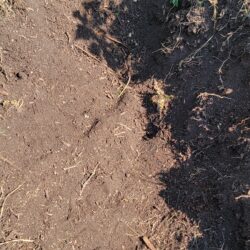
This may not be the prettiest part of the garden, but it is the foundation of nearly everything growing within it.
What you see here is compost purchased from the White Street Landfill in Greensboro, North Carolina. Created from residential yard waste, grass clippings, leaves, and tree debris, the material is carefully processed, monitored, and allowed to cure before becoming nutrient-rich compost capable of supporting new growth.
We purchased a dump truck load in 2025 and still have plenty remaining. Over time, grass and weeds have found their way onto the pile, a reminder that even good soil requires attention and tending.
What makes this pile special is that it doesn’t only nourish my garden.
Over the past year, I have shared this compost with others who are navigating their own seasons of grief. Friends, fellow gardeners, and fellow grievers have taken portions of this pile and carried it home to nourish their own gardens.
There is something beautiful about that.
The compost began as things people no longer wanted—leaves that fell, branches that broke, grass that was cut, and debris that was discarded. Given enough time, pressure, heat, and care, those discarded pieces became something capable of supporting life.
Grief often asks the same of us.
What once felt unbearable can, over time, become wisdom.
What once felt broken can become understanding.
What once felt like an ending can become nourishment for a new beginning.
And perhaps one of the greatest gifts of healing is that we do not keep it to ourselves.
We share it.
We offer encouragement.
We lend support.
We sit with others in their difficult seasons.
Much like this compost pile, healing becomes most meaningful when it helps something else grow.
The vegetables throughout this garden are rooted in this soil.
So are some of the connections formed along the grief journey.
Sometimes growth begins with what is shared.
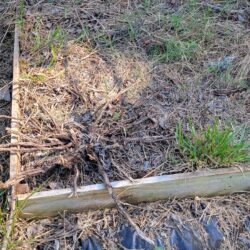
Last year, this raised bed belonged to the sage.
What began as a small planting quickly became a lesson in persistence. The sage grew so vigorously that it crowded out nearly everything else, claiming the space as its own and leaving little room for other plants to thrive.
This spring, the sage was cut back to little more than stems.
At first glance, it appears defeated.
Gardeners know better.
The roots remain.
The foundation remains.
And given a little sunshine, water, and time, the sage will return stronger than ever.
There is something about grief in that lesson.
Some experiences shape us so deeply that even after we cut them back, they remain part of our story. They may no longer dominate our lives the way they once did, but their roots continue to influence who we become.
The goal was never to destroy the sage.
The goal was simply to create room for something else to grow alongside it.
Much like grief, some things are not meant to disappear.
They are meant to find their proper place in the garden.
And before long, this bed—and the sage—will be flourishing once again.
At first glance, this bed appears empty.
The sage that once dominated this space has been cut back to little more than stems and roots. Last year, it grew so vigorously that little else had room to thrive. It claimed the bed, stretched in every direction, and became the defining feature of the space.
Today, it looks quiet.
Almost gone.
But gardeners know better.
Beneath the surface, the roots remain firmly planted. The sage is resting, not finished. Given a little sunshine, water, and time, it will return with the same determination that allowed it to flourish before.
Grief can look much the same.
There are seasons when it feels overwhelming, taking up more space than we want it to. Then there are seasons when it appears dormant, quieter, less visible to others.
But dormant is not the same as gone.
Some experiences become part of our roots. We learn to live alongside them. We create room for other things to grow. Yet they remain woven into the story of who we are.
The goal was never to remove the sage entirely.
The goal was to make room.
Room for new growth.
Room for possibility.
Room for another season.
And before long, this bed will remind us once again that what appears absent is often simply preparing for its next chapter.
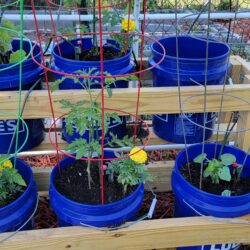
This six-bucket raised tier is more than a gardening experiment—it’s an audition for the future.
Four buckets are home to tomatoes, each paired with a marigold companion. The marigolds help attract pollinators while discouraging some unwanted pests, proving that even in a small space, plants grow better with support.
One bucket is dedicated to okra, a reminder that every garden should leave room for something a little different.
The final bucket remains undecided—a space reserved for possibility, curiosity, and whatever the next season may bring.
Each bucket has its own sprinkler, ensuring that every plant receives the water it needs to thrive. While they share the same structure, each plant still requires individual attention.
In many ways, this tier reflects the larger vision: two future greenhouses designed to provide fresh vegetables throughout the year. Before the greenhouse comes the experiment. Before the harvest comes the learning. Before abundance comes the willingness to plant, observe, adjust, and grow.
Every thriving garden begins as an idea that someone was willing to test.
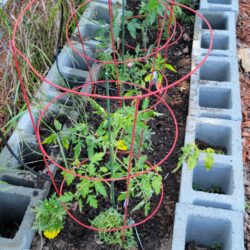
Tomatoes may be the stars of this garden bed, but they are not growing alone.
Sweet Alyssum serves as living mulch, helping shade the soil while attracting beneficial insects that feed on aphids and other garden pests.
Basil helps repel unwanted insects and is believed by many gardeners to improve tomato growth and flavor.
Peppers make efficient use of garden space, sharing similar growing conditions while contributing to the diversity of the bed.
Carrots grow beneath the surface, loosening soil and making use of underground space while the tomatoes reach toward the sun.
Marigolds are the garden’s security team, helping deter certain pests and attracting pollinators and beneficial insects.
Lavender draws pollinators while its strong fragrance may discourage some unwanted garden visitors.
Together, these plants create more than a garden bed—they create a community. Each contributes something different, helping protect, support, and nourish the growth of the whole.
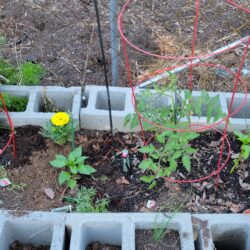
Located along the back wall where it receives full sun throughout the day, this tomato bed was designed with companionship in mind.
The tomatoes may be the main crop, but they are supported by an entire team of defenders and helpers.
Basil helps repel certain unwanted insects while attracting pollinators.
Peppers share similar growing conditions and make efficient use of the garden space.
Marigolds serve as natural bodyguards, attracting beneficial insects while helping discourage some garden pests.
Sweet Alyssum acts as living mulch, helping shade the soil and attracting hoverflies and other beneficial insects that feed on aphids.
Chives add another layer of protection with their strong scent, which may help deter some pests while attracting pollinators when in bloom.
Together, these plants create a small ecosystem where every member contributes something valuable. The goal is not simply to grow tomatoes, but to create a healthy environment where growth, protection, and resilience work together.
Much like life, the strongest growth often happens when we are surrounded by the right support system.
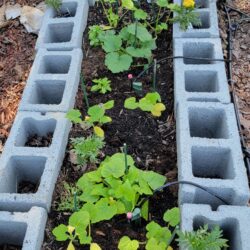
This middle bed was planted with abundance in mind.
Squash and zucchini are known for their generous harvests, often producing more than one household can use. Their broad leaves help shade the soil, conserving moisture while creating a living canopy.
Supporting them are several trusted companions.
Marigolds help attract pollinators while discouraging some unwanted garden pests.
Sweet Alyssum serves as living mulch and attracts beneficial insects that help keep aphids and other pests in check.
Basil adds another layer of protection, helping attract pollinators while contributing its own fragrance and beauty to the garden.
Together, these plants create a bed focused on productivity, protection, and partnership. Each plant serves a purpose, contributing to the health of the whole.
Like grief, growth often requires community. Rarely does anything thrive completely on its own.
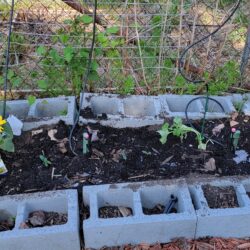
Not everything in a garden begins with a seed packet purchased from a store.
Sometimes growth begins with a gift.
This bed is home to sunflowers, Japanese cucumbers, and traditional cucumbers—all gifted to me by a fellow traveler on the grief journey.
There is something fitting about that.
Grief often introduces us to people we never expected to meet. People who understand the language of loss without requiring an explanation. People who, in the midst of carrying their own pain, still find ways to offer kindness, encouragement, and hope.
These plants are reminders that even during difficult seasons, life continues to offer opportunities for connection and growth.
The sunflowers reach toward the light.
The cucumbers spread and climb wherever they can find support.
And yes, there are weeds in the background.
Much like grief, gardens are never completely finished. There is always something to tend, something to prune, something to remove, and something new trying to grow.
The weeds are a work in progress.
So am I.
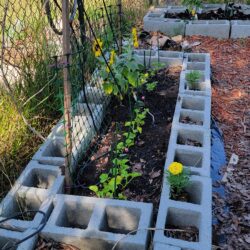
The first bed near the gate is currently empty.
To some, it may look unfinished.
To a gardener, it represents possibility.
Every garden needs a space reserved for future plans, unexpected opportunities, and ideas that have not yet revealed themselves. Not every season requires immediate planting. Sometimes the soil is simply being prepared for what comes next.
The second bed is home to cantaloupes, watermelons, and a sunflower, with marigolds soon to join the community. A galvanized metal trellis will soon provide support, allowing the vines to climb, stretch, and make the most of the available space.
The sunflower serves as both a beacon and a reminder to reach toward the light.
The melons represent patience. They require time, space, support, and faith long before the first fruit appears.
Together, these beds tell a story about hope.
One bed reminds us that not every chapter is written yet.
The other reminds us that growth often begins before we can see the results.
In gardening, as in grief, an empty space is not always a loss.
Sometimes it is an invitation.
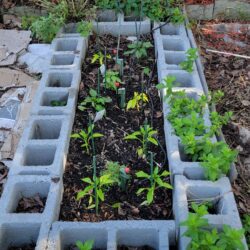
This bed is home to red, yellow, and green peppers, but if we’re being honest, the real personality of the bed belongs to the mint.
Originally planted in the openings of the cinder blocks, the mint had other plans. It has spread beyond its assigned space, crossed boundaries, and established itself on the other side of the fence.
Gardeners often joke that you don’t plant mint—you negotiate with it.
The peppers provide color, flavor, and variety, each growing at its own pace and producing something unique. Meanwhile, the mint continues to remind me that some things are naturally inclined to expand wherever opportunity exists.
There is a lesson here.
Healthy gardens require boundaries.
Not because growth is bad.
But because growth without boundaries can quickly overwhelm everything around it.
The mint is not wrong for doing what mint does.
The gardener simply has to decide where it belongs.
Much like grief, relationships, responsibilities, and even our own emotions, some things require tending, redirecting, and occasionally pruning so that everything in the garden has room to thrive.
The peppers may be the intended crop, but the mint is undoubtedly the teacher in this bed.